NeuroNet is an international academic network with roots in the Portuguese-speaking world. It brings together researchers, professionals and students working across neuroethics, neuroscience and education.
Mission
Why we exist
Advances in neurotechnology and artificial intelligence are published, downloaded and used before ethical reflection joins the conversation. By the time philosophers of mind, ethicists and the people who develop these techniques reach the debate, many decisions have already been made.
NeuroNet exists so that neuroethics can take part while it can still change something: with a shared observatory of advances, a common method for analysing them and a network for working together.
The idea was to give conversations that began at scientific meetings a place to continue all year, through shared research, education and open access to knowledge.
· Lisbon
Public presentation at the CNECV seminar
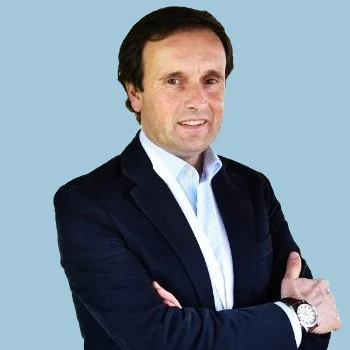
António Jácomo presented the idea for NeuroNet at the annual seminar of the Portuguese National Council of Ethics for the Life Sciences, held at the Assembly of the Republic. His talk on the pioneers of neuroethics in Portugal included NeuroNet in the plans for iCONE 2025.
iCONE, the International Conference on Neuroethics, is where the network began. NeuroNet carries that dialogue beyond the annual conference through projects, mentoring, educational initiatives and publications.
He holds a doctorate in Philosophy and Letters from the Pontifical University of Salamanca. His academic work spans philosophy, bioethics and research ethics.
He oversees the Ethics and Research Integrity Office (TERIO) at 1H-TOXRUN, IUCS-CESPU, which advises on the ethics of research projects and clinical trials. He also chairs the unit’s animal welfare body.